Building stories through photography
Unique Photo Camera Show · Philadelphia · November 2026
Through 20+ years of creating art, I’ve realized that the most important thing to me is creating a recognizable “aesthetic voice”. That is, when people see my work, they instantly know it was created by me.
It was a long road (and lots of failure) to achieve this, and I hope to help others in finding this in themselves.
“I want my photos to portray a story, but I want the story to be different and personal to each person who looks at it. There’s no right or wrong way to read my photos.”— Karen, in The Pulse, 2014
My favorite quote about ideas:

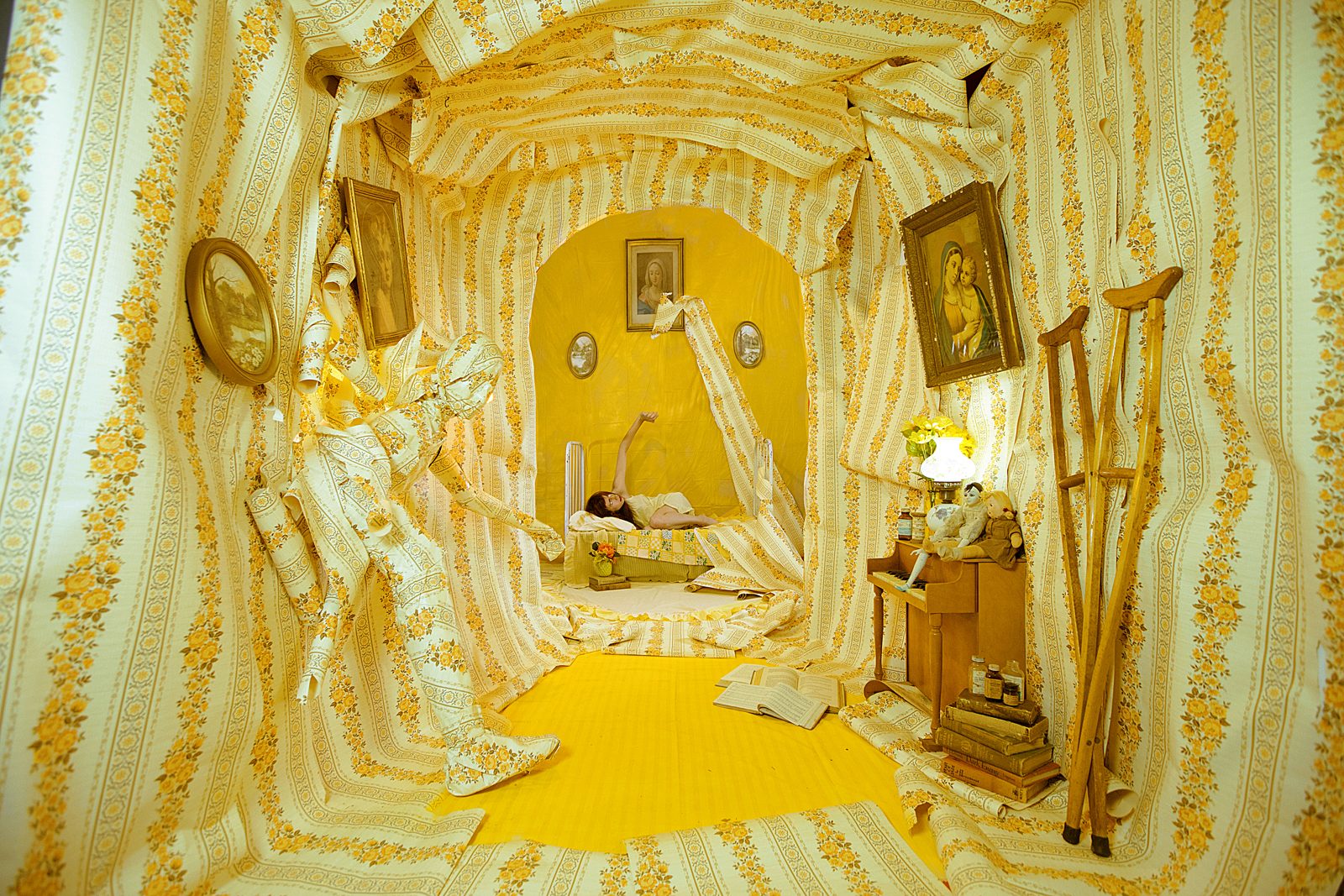
Inspired by “The Yellow Wallpaper” by Charlotte Perkins Gilman
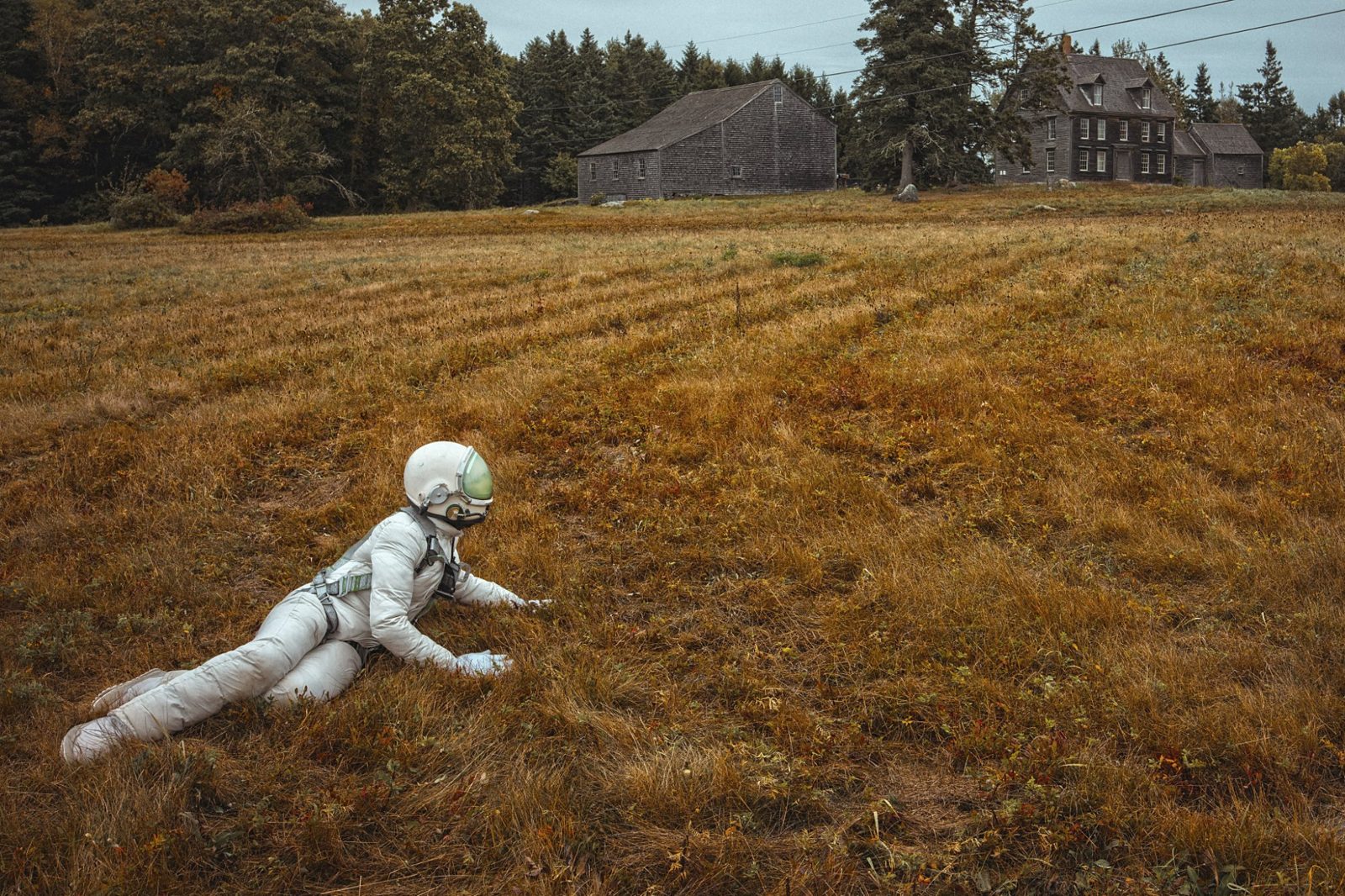
My rendition of Andrew Wyeth’s “Christina’s World”
“Books are the best because you can have a hundred people read the same passage… each person will visually portray what they read in a completely different way.”— Karen, in The Pulse, 2014
Being prepared is great, but being able to work under pressure and on the fly is also equally as great.
“There was a period of time where I contemplated using a studio, but I didn’t have the money for that, which, in hindsight, was a blessing. I decided to use natural light and to find my own locations.”— Karen, in The Pulse, 2014
HitRecord is an online creative community started by actor and director Joseph Gordon-Levitt. Artists from all over the world post their work, and anyone can build on it: someone writes a few lines, someone else illustrates them, someone else sets them to music or turns them into a short film. It’s an amazing place to find collaborators, spark ideas, and practice creating with no budget and no pressure.
“I like it when an image seems darkly ironic, or psychologically displeasing.”— Karen, in Arts Illustrated
“Every little thing has to be in place.”— Karen, in Arts Illustrated
Sometimes I have something to say with my images, sometimes I don’t. Allow yourself to just do things without guidelines or production. Just grab a bag of props and shoot. Doing both and everything in between is a good practice.
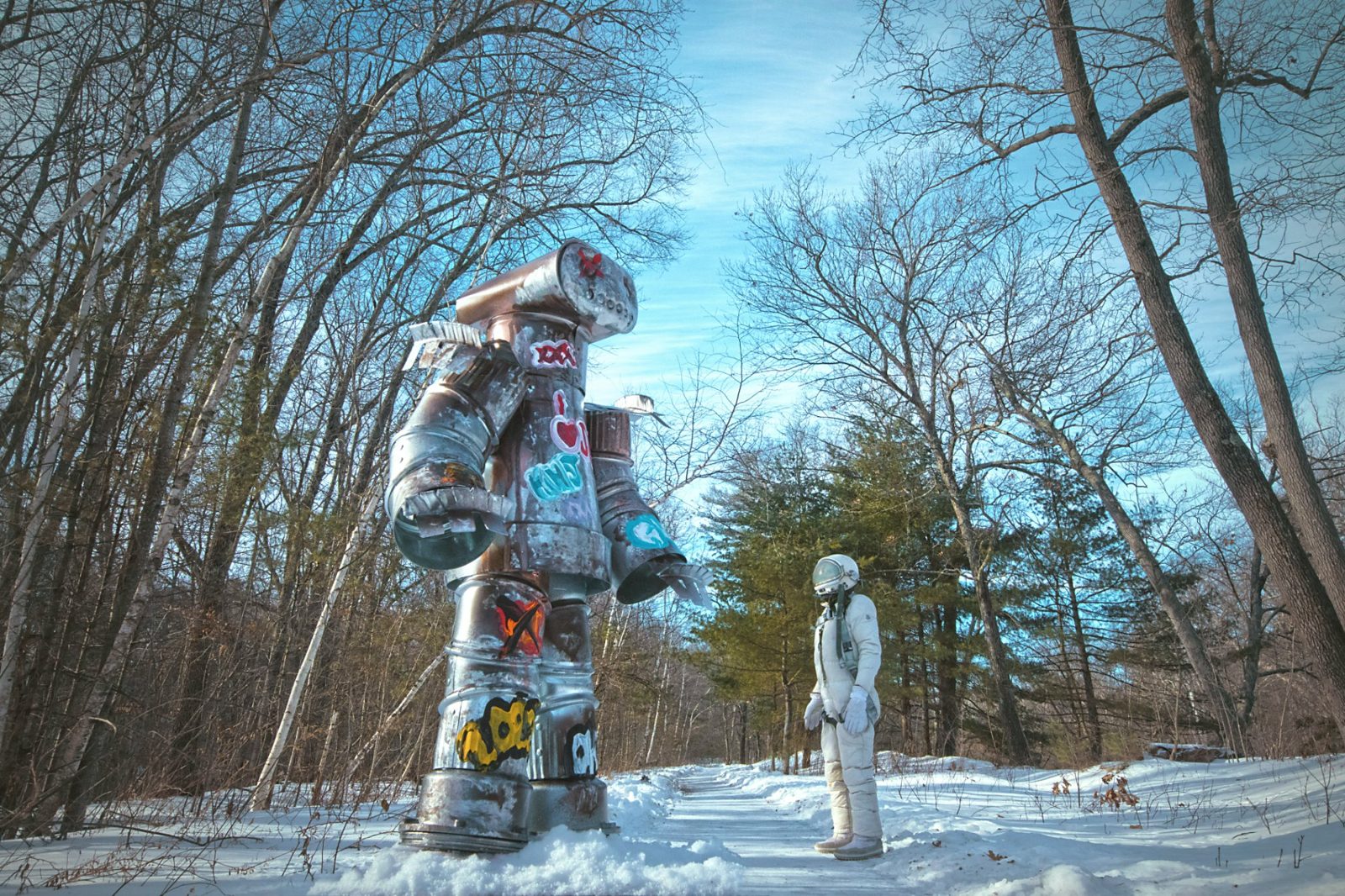
Sometimes, the location can be a secondary character. I sometimes like having my “main character” interacting with the location as a secondary character (looking back at the location, etc.). The way you frame inanimate objects can sometimes make them read as a living thing, or as something with a soul.
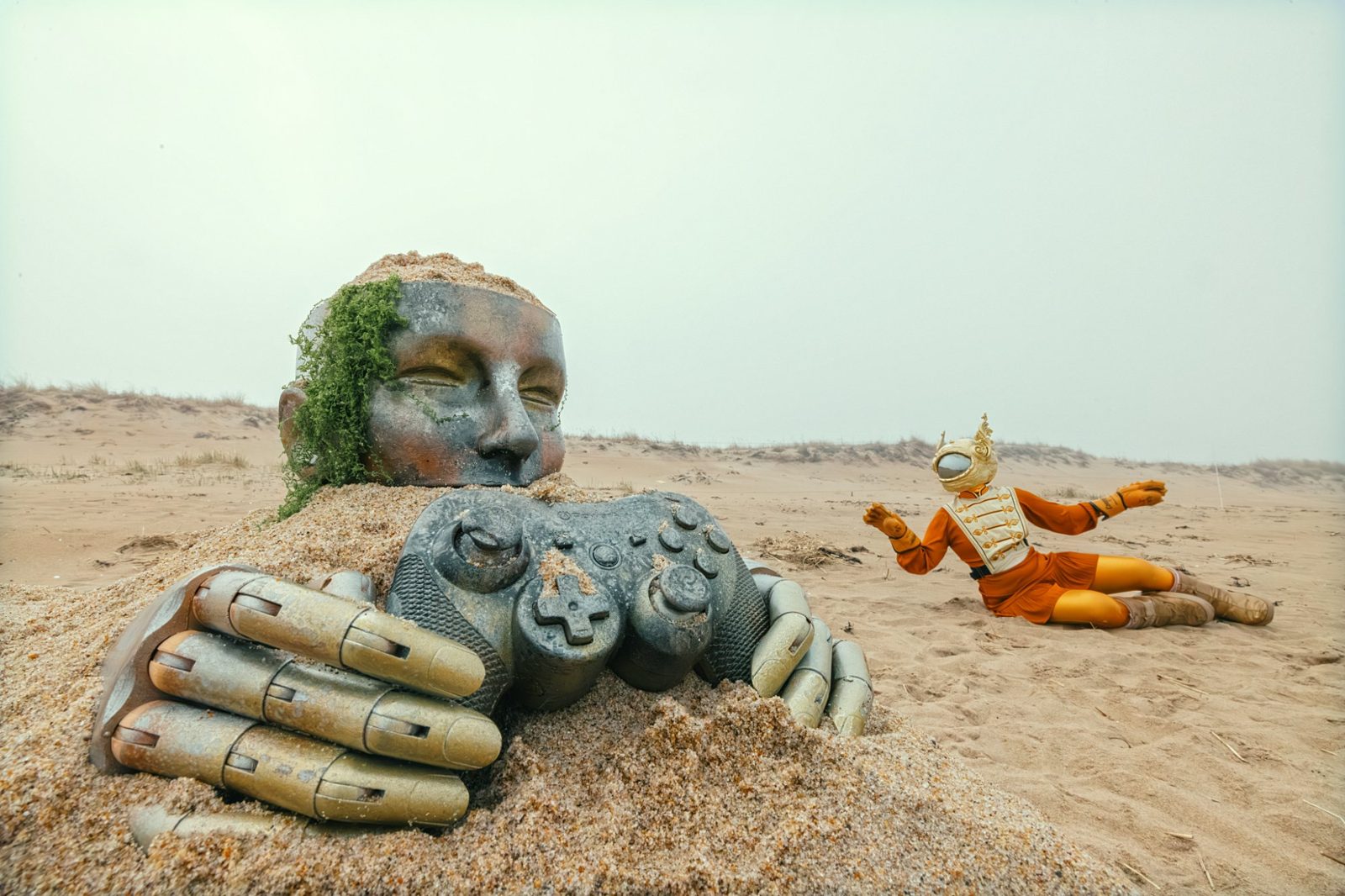
Remember, the character doesn’t necessarily have to be a person.
What will you make the mask out of? Masks can be made out of all sorts of things, so don’t limit yourself. This is also a good opportunity to do self portraits if you don’t feel comfortable in front of a camera. You can do something as ridiculous as cereal boxes on someone’s head.
I’ve been making cardboard heads (I haven’t started shooting the series yet), and as easy and crude as it sounds, I can’t wait to start shooting it.
What is their (its) purpose in the series? Where are they going? What are they doing? What is the end game?
Glue and scissors have always worked wonders for me. You don’t have to be a master seamstress; the wardrobe just has to last for the shoot. Thrift. Cut stuff up. Piece it together. Don’t be afraid to experiment. I use a lot of hot glue, safety pins, and heavy-duty glue that works on metal/wood.
Maybe there’s someone local to you who’s a wardrobe designer and would like to collaborate on a shoot.
Remember, wardrobe has personality. What you choose says a lot about the character.
This is my favorite part.
People don’t realize the magic (or destruction) that’s all around us. I often get asked “Is that real?” “Where is this place?!?”. It’s incredible to me how much people don’t see what exists in the world around us.
Additionally, creating worlds is also one of my favorite things to do. I guess it doesn’t matter at all to the outcome of the work, but it means a lot to me when people come to my studio and/or come to an installation I’ve done, and I get to see their reaction. People always say “you could have just photoshopped all that,” but people’s reactions are always part of the reward of creating for me. I’m an artist and the whole experience is important to me.
“Environment is everything.”— Karen, in Arts Illustrated
“To me, it’s important to do justice to these locations.”— Karen, in Arts Illustrated
“I typically try to learn the history of who lived there, and pair it with my own ideas.”— Karen, in Arts Illustrated


“Just throwing together furniture and not understanding why, makes the image less believable.”— Karen, in Arts Illustrated
Don’t be too proud. I’m not. Garbage day is your best friend. Don’t be afraid to slam on the brakes and grab that free chair that’s put out to the curb.
I tend to have my characters looking away from the camera because it creates more of a story. It tends to make the viewer question where the character is looking, why they are looking away, what is at the end of their gaze, etc. Looking directly at the camera sometimes adds too much finality to the image.
I always try to make my images look like a still from a movie.
“I started shooting horizontally; getting the entire scene I set up and giving my photos a more cinematic feel.”— Karen, in The Pulse, 2014
I want my images to have movement. That is, I want the image to seem as if there was something happening right before it was captured, and that there is something about to happen right after it.
Take your time to look at all angles of your environment. Take it all in. Can you shoot at different angles and viewpoints? Is there something you haven’t thought of? Nothing is worse than going home and regretting not getting a shot that you thought about after the fact (especially if you can’t go back, the location is far, etc.).
“I typically do all my effects at the site of the shoot.”— Karen, in Arts Illustrated
Never pass up the opportunity to take the shot. If you see the moment, take it. Don’t keep driving. Don’t keep walking by.
“When I first started doing portraits, I had no direction… my composition was atrocious and my locations were boring.”— Karen, in The Pulse, 2014
Do series. Mostly series. Personally, I think a sweet spot is 10–30 photos. I’ve gone overboard and have done hundreds in a series (see: my astronaut photos). Doing series allows you to have a cohesive body of work centered around an idea, a theme, a prop, a character, a location, etc. Galleries, publications, etc. love this. It’s a cohesive set of images that can tell a bold story.
You don’t have to photograph professional models to come up with incredible images. Sometimes your awkward friend or family member is an amazing subject. Sometimes YOU are. Allow yourself to explore different personalities, body shapes and types, demographics, etc. with your work. Don’t get caught in the “I have to shoot professional models” rut.
Practice creating different scenes within the same space.
“Definitely creating different scenes within the same space. It’s a good brain exercise, if anything.”— Karen, in Arts Illustrated